

Foxgloves Flowers: The Architectural Magic of a British Summer Sentinels
What if the most majestic presence in your garden was also its most misunderstood inhabitant? Whilst many are drawn to the ethereal, towering spires of foxgloves flowers, it is common to feel a sense of hesitation regarding their biennial nature or their potent toxicity. You might find yourself admiring their dappled bells from a distance, unsure how to welcome such a complex plant into your home whilst keeping everyone safe. It's a natural caution, born from a desire to protect your family and pets while still yearning for that quintessential, wild British summer aesthetic.
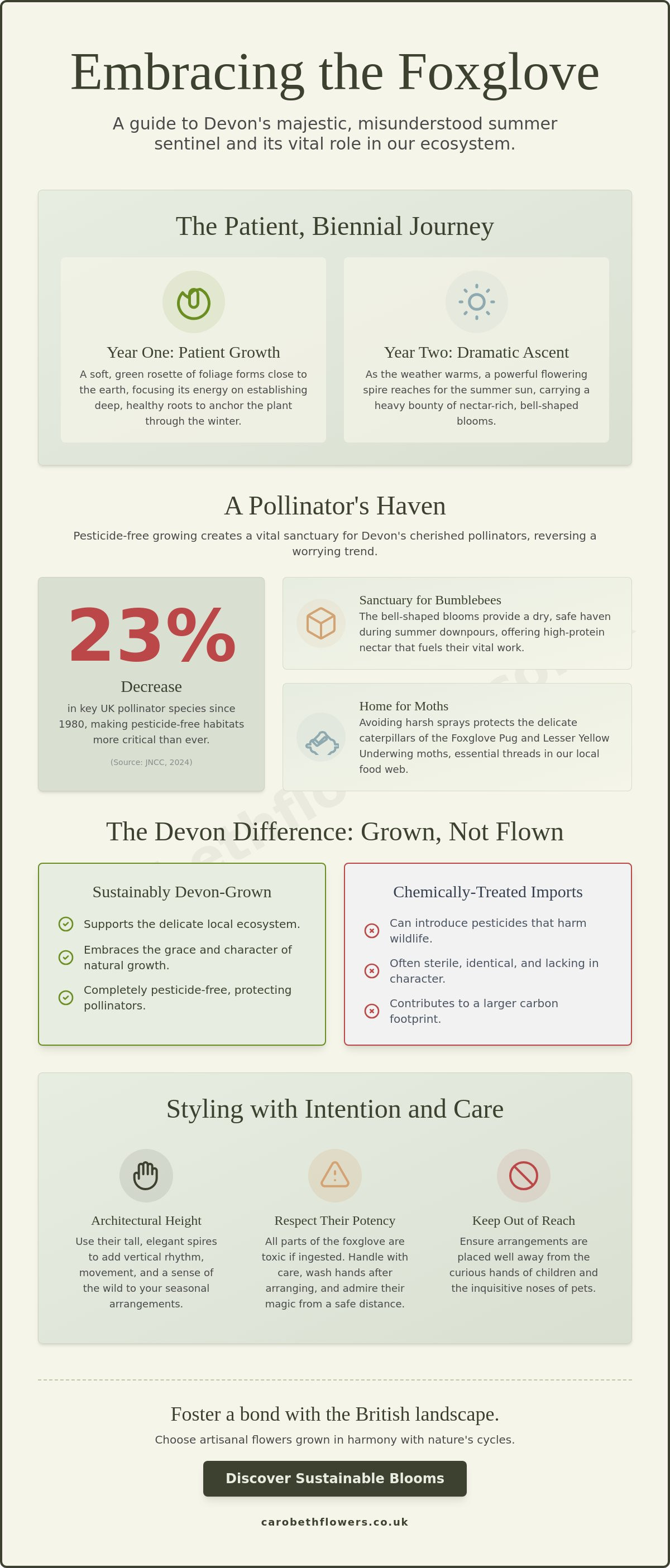
This article promises to help you embrace the architectural magic and ecological importance of these Devon-grown sentinels with absolute confidence. You'll learn why these plants are vital for our environment, especially as JNCC reports a 23% decrease in key pollinator species since 1980. We'll explore how to navigate their biennial cycle and provide practical advice for styling them safely and beautifully at home. By choosing sustainably grown, local blooms, you can shed the guilt of imported alternatives and find a restorative connection to the rhythm of the Devon landscape.
Key Takeaways
- Embrace the patient, biennial rhythm of the foxglove as it journeys from a quiet green rosette to a towering summer sentinel.
- Explore the vital connection between pesticide-free growing and the survival of our most cherished Devon pollinators.
- Master the art of using foxgloves flowers to add architectural height and movement to your seasonal arrangements.
- Learn to style these dramatic blooms safely. Respecting their natural character allows you to invite their magic inside with peace of mind.
- Foster a deeper bond with the landscape by choosing sustainable, artisanal flowers grown in harmony with nature's cycles.
The Enchantment of Foxgloves: A Sentinel of the British Summer
There is a specific, quiet magic that descends upon the Devon countryside as June arrives. Amongst the tangled hedgerows and dappled woodland clearings, the first foxgloves flowers begin to unfurl. Known scientifically as Digitalis purpurea, these native British beauties act as silent sentinels of the season. Their iconic bell-shaped blooms, stacked neatly upon tall stems, provide a sense of vertical rhythm that few other plants can match. They aren't just flowers; they're the architectural heartbeat of our local landscape, offering a sense of depth and character to any natural garden space.
Understanding the Foxglove Lifecycle
To truly appreciate the foxglove is to respect its patient, biennial journey. Unlike annuals that rush to bloom in a single season, these plants embrace a slower pace of life. This two-year cycle is a lesson in mindfulness and steady growth.
- Year One: This is a season of quiet preparation. A soft, green rosette of foliage forms close to the earth, focusing all its energy on establishing deep, healthy roots that will anchor the plant through the winter.
- Year Two: As the weather warms, the dramatic ascent begins. A powerful flowering spire reaches for the summer sun, carrying a heavy bounty of nectar-rich bells.
- Self-seeding: Once the flowering display concludes, the foxglove scatters thousands of tiny seeds. This ensures their graceful presence remains a constant in the wilder corners of the landscape for years to come.
Varieties and Colours of the Farm
On our farm, we celebrate the diverse palette of these majestic spires. Whilst the classic dusky pinks and deep purples feel most at home in a Devon lane, the "Albiflora" varieties offer an ethereal, ghostly white that glows beautifully in the twilight. If you look closely inside each bell, you'll find a unique "spotted throat." These intricate markings aren't merely decorative; they serve as a perfect landing strip designed by nature for its favourite visitors. The foxglove stands as the undisputed cornerstone of the British cottage garden aesthetic, bridging the gap between wild woodland and curated beauty.
Sustaining the Wild: Why Pesticide-Free Growing Protects our Pollinators
Cultivating life starts deep within the soil, far beneath the reach of the summer sun. At our Devon flower farm, we choose to work alongside nature rather than trying to dominate it. This pesticide-free ethos ensures that foxgloves flowers grow with a natural resilience often missing in chemically-treated imports. By avoiding harsh sprays, we protect the delicate caterpillars of the Foxglove Pug and Lesser Yellow Underwing moths. This protection is vital, given that JNCC reported a 23% decrease in key UK pollinator species in 2024 compared to 1980 levels. These small creatures are essential threads in our local food web; their presence is the hallmark of a truly healthy landscape.
A Sanctuary for Bumblebees
The connection between the Common Foxglove, Digitalis purpurea and the long-tongued bumblebee is a beautiful example of co-evolution. During the sudden downpours typical of a British July, the bell-shaped blooms provide a dry, safe haven for bees to rest. This "clapper" effect is more than just shelter. Inside these foxgloves flowers, bees are rewarded with a high-protein nectar that fuels their vital work. It's a restorative sight to watch a bumblebee disappear into a bloom, knowing the plant offers both nourishment and a place of peace.
The Beauty of Imperfection
There is a quiet dignity in the unique character of a garden-grown bloom. You won't find the sterile, identical stems of a supermarket shelf here. Instead, you'll find graceful curves, varying heights, and the honest marks of a life lived outdoors. This artisanal quality brings a sense of the wild into your living space, creating a dialogue between your home and the shifting seasons. There's a profound joy in knowing that your arrangement has actively supported the Devon ecosystem rather than depleting it. When you choose to order local flowers, you are participating in a cycle of restoration that benefits both your well-being and the earth.
Inviting Nature In: Styling Foxgloves with Intention and Care
Bringing foxgloves flowers into your home is an act of intentionality; it is an invitation to let the wild, architectural grace of the Devon lanes settle into your living space. These tall spires provide a unique sense of movement that few other blooms can offer. Their natural lean and tapering tips create a dynamic flow, drawing the eye upward and adding a layer of sophisticated height to any room. When you arrange them, you aren't just placing flowers in water; you're capturing a moment of the British summer's peak.
Artisanal Arrangement Tips
In the world of flower bouquet styling, the foxglove serves as the perfect "thriller" element. Its commanding presence acts as a focal point around which softer, more rounded blooms can gather. To honour their organic form, choose vessels that reflect a slow living aesthetic, such as heavy stoneware ceramics or clear glass that reveals the sturdy, green stems. For a truly breathtaking seasonal display, try pairing the vertical drama of foxgloves with the lush, multi-petalled softness of ranunculus flowers. This contrast in texture and shape creates a visual dialogue that feels both artisanal and deeply grounded.
Safety and Respect
Whilst we celebrate their beauty, we must also respect their nature. Whilst all parts of the foxglove are toxic if ingested, they can be enjoyed safely as a visual feast when handled with care. Always wash your hands after handling the stems and ensure your vases are placed well out of reach of curious children or pets. Beyond safety, extending the life of your foxgloves flowers requires a gentle touch. Trim the stems at a sharp angle and place them in cool, fresh water immediately. As Foxgloves, bee-friendly havens in the wild, they deserve the same level of care and appreciation when they transition to your table.
The Gift of the Season
Including these majestic spires in a seasonal gift box is a thoughtful way to connect a loved one to the true rhythm of the year. It's a reminder to pause and appreciate the fleeting magic of June and July. By choosing these Devon-grown sentinels, you're sharing more than a bouquet; you're offering a restorative piece of the countryside, grown with a commitment to the earth and a deep love for the natural world.
Embracing the Rhythms of a Devon Summer
By understanding the patient, two-year journey of the foxglove, we learn to appreciate the steady, unhurried pace of the natural world. These architectural sentinels do far more than just decorate our lanes; they provide vital sanctuaries for bumblebees and moths, acting as a bridge between our gardens and the wider Devon ecosystem. Choosing to welcome foxgloves flowers into your home is a celebration of this delicate balance, especially when they're grown with respect for the earth and its many inhabitants.
You can continue this journey of mindful connection by inviting our artisanal, sustainable designs into your own space. Every stem we cultivate is 100% British-grown right here in Devon, ensuring your blooms are as fresh as they're pesticide-free and pollinator-friendly. Whether you're styling a single dramatic spire or a full bouquet, you're supporting a way of living that values craftsmanship and the quiet beauty of the changing seasons.
Bring the magic of the Devon countryside home with a seasonal flower gift box and let the restorative joy of nature's finest work brighten your day. We look forward to sharing the unique character of our farm with you.
Frequently Asked Questions
Are foxgloves flowers poisonous to touch or just to eat?
All parts of the foxglove are poisonous if ingested, and touching the foliage or blooms can occasionally cause skin irritation for those with sensitive skin. Whilst the primary risk comes from consumption, the Royal Horticultural Society suggests wearing gloves when handling the plants or seeds as a gentle precaution. Respecting the plant's natural defences allows you to enjoy their beauty safely. Always wash your hands thoroughly after styling your foxgloves flowers to ensure peace of mind for yourself and your family.
How long do foxgloves stay in bloom during a British summer?
You can typically expect foxgloves to grace the landscape from early June through to late July. Each architectural spire blooms progressively from the bottom upwards, a slow unfurling that provides visual interest for several weeks. The exact duration often depends on the warmth of the Devon sun and the moisture held within the soil. Once the main spike fades, cutting it back can sometimes encourage smaller, secondary side shoots to appear, extending the seasonal magic just a little longer.
Can I include foxgloves in a wedding bouquet?
Yes, foxgloves make an exquisite and dramatic addition to a seasonal wedding bouquet. Their vertical form creates a sense of movement and wild elegance that perfectly suits an artisanal, garden-style aesthetic. We often include them in our Carobeth Wedding Flowers to provide that essential architectural focal point. Because they are delicate, they require careful conditioning to ensure they remain hydrated and vibrant throughout your special day, serving as a beautiful, towering symbol of the British summer.
Why are my foxgloves not flowering in their first year?
It is perfectly natural for your foxgloves flowers not to bloom in their first year because they are biennial plants. During this initial season, the plant is focusing its energy on establishing a lush rosette of leaves and a strong, healthy root system beneath the earth. This patient period of growth is essential for the dramatic display that follows. In their second summer, they will use those stored reserves to send up their iconic flowering spires, rewarding your steady wait with ethereal beauty.