

Ranunculus Flowers: The Ultimate Guide to the Rose of the Spring
The most romantic bloom in your home this spring shouldn't be a rose flown across an ocean, but a multi-petalled wonder grown right here in British soil. You likely adore the way their paper-thin petals unfurl in a dizzying spiral, whilst it remains frustrating when those delicate heads droop too soon or when you feel a pang of guilt over the carbon footprint of imported stems. Understanding ranunculus flowers is about more than just aesthetics; it's about connecting with the quiet, restorative rhythm of the seasons.
We agree that a home filled with flowers should feel like a sanctuary, not a source of environmental concern. This guide promises to lead you through the enchanting world of these spring beauties, offering expert tips on keeping your stems vibrant and healthy. We will explore their rich botanical heritage, the best ways to style them in your home, and how to support a more sustainable, local floral industry through mindful choices. From the first bud to the final petal, let us help you find beauty in the small, seasonal details of the natural world.
Key Takeaways
- Uncover the poetic history of the "Little Frog" and how its delicate, tissue-paper petals bring a sense of restorative joy to your living space.
- Identify the unique characteristics of different varieties, from the densely packed, ruffled layers of the Cloony series to the shimmering, wildflower charm of the Butterfly type.
- Learn why sourcing British-grown ranunculus flowers is a more mindful, sustainable choice that honours the natural seasonal cycle of the UK.
- Discover practical, gentle methods for conditioning your stems to prevent bacteria and help your bouquet thrive for longer in its vase.
- Explore how to welcome these field-fresh beauties into your home through the Carobeth in a Box collection during their peak spring season.
What are Ranunculus Flowers? An Introduction to the "Little Frog"
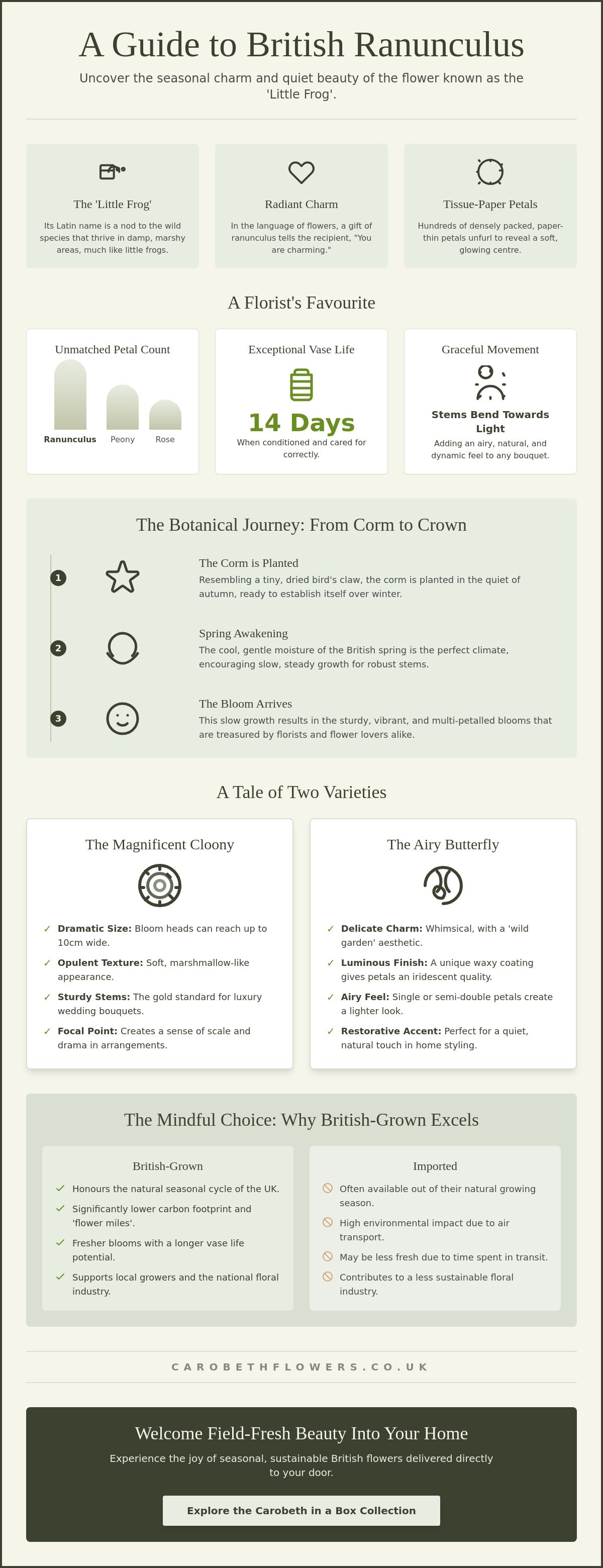
The Ranunculus genus holds a secret in its name. Derived from the Latin words for 'little frog', it's a playful nod to the wild species that once thrived along the damp, marshy banks of streams. Whilst the modern Ranunculus asiaticus has travelled far from its Persian roots, it still retains a deep-seated love for the cool, gentle moisture of early spring. These blooms are a masterclass in delicate complexity. Their petals are as thin as tissue paper, gathered in hundreds of densely packed layers that slowly unfurl to reveal a soft, glowing centre. Unlike the rigid structure of mass-produced flowers, ranunculus flowers possess stems that curve and arch with a graceful, almost lyrical personality.
In the traditional language of flowers, gifting a bouquet of ranunculus is a profound and sincere gesture. It carries the symbolic meaning of radiant charm, essentially telling the recipient, "you are charming." It's no wonder they've transitioned from being a quiet garden classic to the most coveted choice for spring weddings. They offer a sense of intentionality and artisanal beauty that feels deeply personal to the couple and their guests. This shift in popularity reflects a wider desire for blooms that feel connected to the land and the changing seasons.
The Botanical Journey: From Tuber to Bloom
The life of these flowers begins in a way that seems almost at odds with their final elegance. They grow from corms which look remarkably like tiny, dried-out bird claws. We plant these unique tubers in the quiet of autumn, allowing them to establish themselves whilst the earth rests. As the British spring arrives with its characteristic cool weather, these corms awaken. This climate is exactly what they crave. The slow growth during chilly months results in the sturdy, vibrant blooms we treasure.
Why Ranunculus are the Florist’s Favourite
If you've ever been mesmerised by the sheer volume of a flower's head, you've likely seen a ranunculus. They often surpass both roses and peonies in their petal count, creating a texture that feels luxurious. Florists adore ranunculus flowers for their resilience. When placed in a clean vase, they can remain fresh for up to 14 days. There's also a unique movement to their stems. They bend towards the light, adding an airy, natural feel to any bouquet.
Exploring the Varieties: From Cloony Giants to Delicate Butterflies
Whilst all ranunculus flowers share a certain poetic charm, the sheer diversity within the species allows for endless creative expression. It's helpful to view these blooms through the lens of their structure and personality. On one hand, you have the structural heavyweights like the Elegance and Cloony series, which offer a sense of grandeur and traditional romance. On the other, the Butterfly varieties provide a lighter, more whimsical touch that feels deeply connected to the "wild garden" aesthetic. This range ensures there's a perfect bloom for every mood, whether you're seeking a bold statement or a quiet, restorative accent for your bedside table.
The colour palette available today is a testament to the artistry of modern growers. You'll find soft, creamy apricots and blush pinks that mimic the first light of dawn, sitting alongside moody, dark burgundies that add a sophisticated depth to any arrangement. According to the NC State Extension Gardener Plant Toolbox, these plants are prized for their showy, multi-petalled flowers, though the texture varies significantly between types. Standard varieties often possess a soft, matte finish on their petals. In contrast, the newer Butterfly types are known for a unique waxy coating that gives them a luminous, iridescent quality.
The Magnificent Cloony Ranunculus
The Cloony series is the undisputed giant of the family. These magnificent blooms can produce heads up to 10cm wide, making them a focal point that's hard to ignore. As they slowly unfurl, the petals have a soft, marshmallow-like appearance, creating a look that's both opulent and comforting. Because of this incredible volume and their sturdy stems, they've become the gold standard for luxury wedding flowers, providing a sense of scale and drama that smaller varieties simply can't match. They're a true celebration of slow, intentional growth.
Butterfly Ranunculus: The Airy Alternative
If the Cloony is about drama, the Butterfly ranunculus is about light and movement. Unlike the single-headed standard types, Butterfly varieties feature multi-branched stems, with several smaller blooms dancing on a single stalk. Their petals are single-layered and possess a remarkable shimmer that catches the light beautifully in a sunlit room. This shimmering effect, combined with their delicate form, makes them perfect for meadow-style designs. They mimic the unhurried grace of wildflowers, bringing a breath of fresh, seasonal air into your home without the heavy footprint of imported alternatives.
The Ethical Choice: Why British-Grown Ranunculus Excel
Choosing ranunculus flowers for your home is an act of appreciation for nature's intricate craftsmanship, yet the journey those flowers take to reach your vase matters deeply. Whilst the global market offers blooms year-round, there is a profound difference in the soul of a flower grown in Devon soil compared to one flown thousands of miles from South America or Africa. Embracing the "Slow Flower" movement means honouring the natural seasonality of the UK, where the cool, damp spring produces stems with a depth of colour and a gentle, earthy scent that hydroponic imports simply cannot replicate. This movement is built on transparency and a return to artisanal, small-scale farming that values the health of the planet as much as the beauty of the bloom.
The Missouri Botanical Garden notes that the most popular florist varieties are hybrids of the Persian Buttercup, and when these are grown in their natural season, they develop a unique character. Stems grown slowly in real soil possess a sturdiness and a subtle fragrance that mass-produced versions often lack. There is a restorative joy in knowing your flowers have been harvested by hand just a few miles away, rather than being treated as a global commodity.
The Environmental Cost of Imported Blooms
The mass market often relies on a heavy-handed approach to floral production. Imported stems endure high-energy refrigerated transport and are frequently wrapped in layers of single-use plastic, creating a significant carbon footprint before they even arrive at a florist's door. To survive these long, arduous journeys, many "perfect" supermarket flowers are treated with synthetic chemicals to unnaturally extend their shelf life. We believe there is far more beauty in the natural imperfections and unique, winding curves of a locally grown stem. These flowers haven't been forced; they've been nurtured in harmony with the local climate.
Supporting Biodiversity on a Devon Flower Farm
Supporting our local Devon hedgerows starts with the way we treat the soil. At Carobeth Flowers, our organic-led methods ensure that ranunculus flowers grow amongst a thriving ecosystem of bees, butterflies, and healthy soil microbes. By favouring field-grown plants over climate-controlled glasshouses, we produce stronger, more resilient stems that have experienced the rhythm of the Devon weather. This process allows the flowers to develop a natural "character" and scent that is often lost in industrial production. It's a way of seeing your bouquet not just as a decoration, but as a vital part of a wider, living ecosystem that you are helping to protect with every seasonal choice.
Conditioning and Styling: How to Organise Your Ranunculus at Home
Bringing ranunculus flowers into your living space is an invitation to slow down and appreciate the intricate details of the season. To ensure these multi-petalled beauties thrive, they require a gentle, specific approach to care that respects their delicate biology. Unlike many other blooms, their stems are hollow and prone to softening if mismanaged. By following a few mindful steps, you can extend their radiant presence and enjoy their gradual unfurling for nearly a fortnight.
- Cleanse your vessel: Always start with a thoroughly scrubbed vase. Bacteria are the silent enemy of hollow-stemmed flowers, as they quickly block the water-conducting tissues.
- The precision cut: Use sharp, clean snips to trim the stems at a 45-degree angle. This increases the surface area for hydration without crushing the delicate stem walls.
- The shallow pour: Fill your vase with only 2-3 inches of tepid water. Submerging too much of the stem leads to decay and "mushiness."
- Mindful placement: Keep your arrangement away from direct radiators, draughts, and ripening fruit. Fruit releases ethylene gas, which causes petals to drop prematurely.
- Regular renewal: Every two days, re-trim the stems by a few millimetres and refresh the water to keep the environment pristine.
The "Shallow Water" Secret
It might feel counterintuitive to provide so little water, but deep water is the primary reason bouquets wilt before their time. Because ranunculus flowers have a unique drinking behaviour through their hollow centres, they are incredibly efficient at taking up moisture. Too much water pressure against the outer stem walls causes them to become waterlogged and weak. To keep the water crystal clear and free from life-shortening microbes, you can add a tiny drop of household bleach or a sachet of flower food to your shallow reservoir.
Mindful Styling: Creating a Seasonal Centrepiece
Styling these blooms is an exercise in appreciating natural grace. Their stems often have a delightful, "wiggly" character that adds a sense of movement and unhurried charm to any room. You might choose to pair them with other spring stars, such as velvety anemones or elegant tulips, to create a textured, meadow-like arrangement. Alternatively, try a minimalist approach by placing single stems in a series of delicate bud vases. This allows you to focus on the individual architecture of each flower, from the tight central bud to the sprawling, paper-thin outer petals. Using the natural curves of the stems creates a display that feels alive and connected to the garden.
If you're ready to practice these styling techniques with the freshest seasonal stems, our Carobeth in a Box provides everything you need to create a sustainable, field-grown display at home.
Sourcing Sustainable Ranunculus: The Carobeth Experience
The arrival of ranunculus flowers in the British countryside marks a significant turning point in the floral calendar. Typically spanning from March to June, this window of time allows us to share the very best of our Devon-grown blooms whilst they are at their peak of vitality. Sourcing your flowers directly from a local grower isn't just about the aesthetic; it's about participating in a cycle of growth that respects the land. At Carobeth Flowers, we've curated an experience that brings this restorative joy directly to you, ensuring that every stem you receive is 100% British and entirely free from synthetic chemicals. We don't believe in the harsh treatments or long-distance travel that characterise the mass market.
Whether you're looking for a thoughtful gift for a loved one in Devon or wish to enjoy the unhurried beauty of the seasons yourself, our flowers offer a connection to the earth that mass-market alternatives cannot provide. We believe that receiving flowers should feel like a gentle pause in a busy world. By choosing field-grown stems, you're supporting a more intentional way of living and a healthier environment for our local pollinators. It's a simple, sincere way to bring the outside in, honouring the craftsmanship of the natural world.
From Our Devon Field to Your Front Door
Our harvesting process is a patient, methodical endeavour. We hand-pick each bloom at the "marshmallow" stage, which is when the bud feels soft and squishy to the touch but hasn't yet fully opened. This precise timing ensures that the flowers have the longest possible life in your home, allowing you to witness their entire journey from tight bud to sprawling, multi-petalled wonder. To protect these delicate treasures, we use Carobeth in a Box, our nationwide delivery service that utilises entirely plastic-free packaging. At Carobeth Flowers, we also offer a One-off Gift Box for those special moments that deserve a sustainable, artisanal touch.
Planning a Sustainable Wedding in the South West
For couples dreaming of a romantic, eco-conscious celebration, ranunculus flowers often form the heart of our spring wedding designs. Their intricate layers and soft, poetic colours make them an ideal choice for bouquets and centrepieces, particularly for ceremonies at locations like Brickhouse Vineyard. Choosing seasonal, locally grown flowers for your special day reduces the environmental impact of your wedding whilst ensuring your floral arrangements have a unique, artisanal character. We invite you to enquire about our bespoke wedding floral design to see how we can weave the magic of our Devon fields into your celebration. By aligning your wedding with the natural rhythm of the year through Carobeth Flowers, you create a memory that is as sustainable as it is beautiful.
Welcome the Radiant Charm of the Spring into Your Space
Embracing the season means more than just decorating a room; it's about connecting with the quiet, restorative cycles of the natural world. By choosing ranunculus flowers that are grown with intention, you're supporting a floral industry that values the earth as much as the bloom. We've explored how the right care, such as the shallow water technique, helps these multi-petalled wonders thrive, and how the choice between a ruffled Cloony or a shimmering Butterfly variety allows for deep personal expression. These flowers carry the soul of the Devon landscape, grown using organic methods that protect our local biodiversity amongst the hedgerows.
If you feel inspired to bring this artisanal beauty into your own home, we invite you to explore our seasonal offerings. Each stem is 100% British grown in our Devon fields, nurtured without pesticides, and delivered to you in entirely plastic-free packaging. You can order a seasonal "Carobeth in a Box" featuring our fresh Devon ranunculus to experience this unhurried elegance for yourself. Let these blooms be a reminder to pause, breathe, and find joy in the small, exquisite details of the changing seasons.
Frequently Asked Questions
Are ranunculus flowers poisonous to cats and dogs?
Yes, these flowers are toxic to both cats and dogs if they are ingested. They contain a natural compound called protoanemonin, which can cause digestive upset, drooling, or skin irritation in curious pets. It's best to place your bouquet in a safe, elevated spot where paws cannot reach. Whilst they are beautiful to look at, keeping them out of reach ensures your home remains a peaceful sanctuary for every member of the family.
How long do ranunculus flowers typically last in a vase?
You can typically expect your blooms to last between 10 and 14 days in a vase when given the proper care. Their longevity is one of their most charming traits, as they slowly unfurl their many layers over nearly a fortnight. To achieve this, ensure you follow the shallow water technique and keep the environment pristine. This unhurried blooming process allows you to find beauty in their changing form every single day.
Why are my ranunculus stems drooping or turning soft?
Drooping or soft stems are usually a sign of bacteria growth or a water level that is too deep. Because ranunculus flowers have hollow stems, they are particularly susceptible to waterlogging and rot if submerged. If the stems feel mushy, it's a signal that the water has become stagnant. Re-trimming the stems and moving them into just two inches of fresh, clean water will often help them regain their structural integrity and grace.
Can you buy British-grown ranunculus all year round?
No, British-grown varieties are seasonal and typically available from March until June. We believe in honouring the natural cycle of the earth, which means these blooms are only at their best during the cool, damp British spring. Whilst imported varieties might appear in shops at other times, they lack the low carbon footprint and artisanal character of our local, field-grown stems. Waiting for their return makes their arrival even more restorative.
What is the best way to revive a wilted ranunculus bloom?
To revive a wilted bloom, give the stem a fresh, diagonal cut and place it in a small amount of tepid water. Sometimes a thirsty flower simply needs a clean path to hydration to find its strength again. If the head is drooping severely, you can gently support the stem with a taller, narrow vase whilst it drinks. This simple act of care often encourages the petals to perk up, allowing the flower to continue its slow, graceful display.
Do ranunculus flowers have a scent?
Most varieties have a very subtle, light scent that is often described as slightly sweet or earthy. Unlike the overpowering fragrance of some lilies, their aroma is delicate and non-intrusive, making them perfect for those who prefer a more serene atmosphere. Field-grown ranunculus flowers often possess a more noticeable, natural character than those grown in sterile, industrial environments. Their beauty is primarily a visual and tactile experience, inviting you to linger on their intricate textures.
What is the difference between a ranunculus and a peony?
Whilst they share a similar ruffled appearance, the primary difference lies in their size and growth cycle. Peonies are much larger, woody-stemmed perennials that bloom for a very short window in early summer. Ranunculus are smaller, grow from claw-like corms, and offer a much longer vase life. They provide a similar romantic aesthetic to the peony but with a more delicate, airy feel that suits a "wild garden" style perfectly.
How do I know if a ranunculus is fresh when buying from a florist?
Look for tight, firm buds that feel like a slightly squished marshmallow when gently pressed. If the flower is already fully open, it has likely already spent several days of its life cycle in the shop. The stems should be sturdy and vibrant green rather than pale or slimy at the base. Choosing flowers that are still in their bud stage ensures you get to enjoy the entire unhurried process of them unfurling in your own home.