

Styling Your Local Devon Bouquets at Home
What if the secret to an artisanal arrangement isn't found in a rigid set of rules, but in the gentle, untamed movement of a Devon hedgerow? Many of us have felt that slight pinch of disappointment when a bundle of fresh, local blooms ends up looking a little too stiff or supermarket-like once it reaches the vase. It's a common hurdle, yet the process of flower bouquet styling should never feel like a chore; it's a quiet, mindful conversation between you and the natural world.
By choosing sustainable, British-grown stems, you're already halfway to capturing that sought-after slow living aesthetic. In this guide, you'll discover how to bring the tranquil beauty of the Devon countryside into your living space whilst gaining a true sense of creative accomplishment. We will look at how to group your favourite seasonal treasures, from late-spring peonies to delicate ranunculus, and explore the practical steps needed to maximise the life of every petal so your home remains a sanctuary of colour and scent.
Key Takeaways
- Understand the restorative power of the slow floral movement and why British-grown blooms offer a more characterful, seasonal experience than mass-produced imports.
- Master the essential pillars of flower bouquet styling by balancing colour, texture, and form to mimic the effortless beauty of the Devon countryside.
- Learn how to match your flowers to the perfect vessel, whether using artisanal ceramics or vintage jars, to support the natural growth habit of every stem.
- Discover how to choose the best location in your home for your arrangement, ensuring it acts as a calming centrepiece or a subtle, mindful accent.
- Explore the vital first steps of conditioning your Carobeth in a Box delivery to maximise the life and vibrancy of your unique, field-fresh flowers.
The Art of Flower Bouquet Styling: Embracing the Slow Floral Movement
There is a quiet, restorative power in the simple act of bringing the outside in. For many, the process of flower bouquet styling is far more than a decorative task; it is a form of creative mindfulness that grounds us in the present moment. By choosing to arrange your own blooms, you aren't just filling a vase. You're engaging in a seasonal conversation with the Devon landscape, noticing the way a stem of cow parsley leans or how a ranunculus petal feels like spun silk against your skin. This connection to the earth provides a gentle anchor in our often hurried lives.
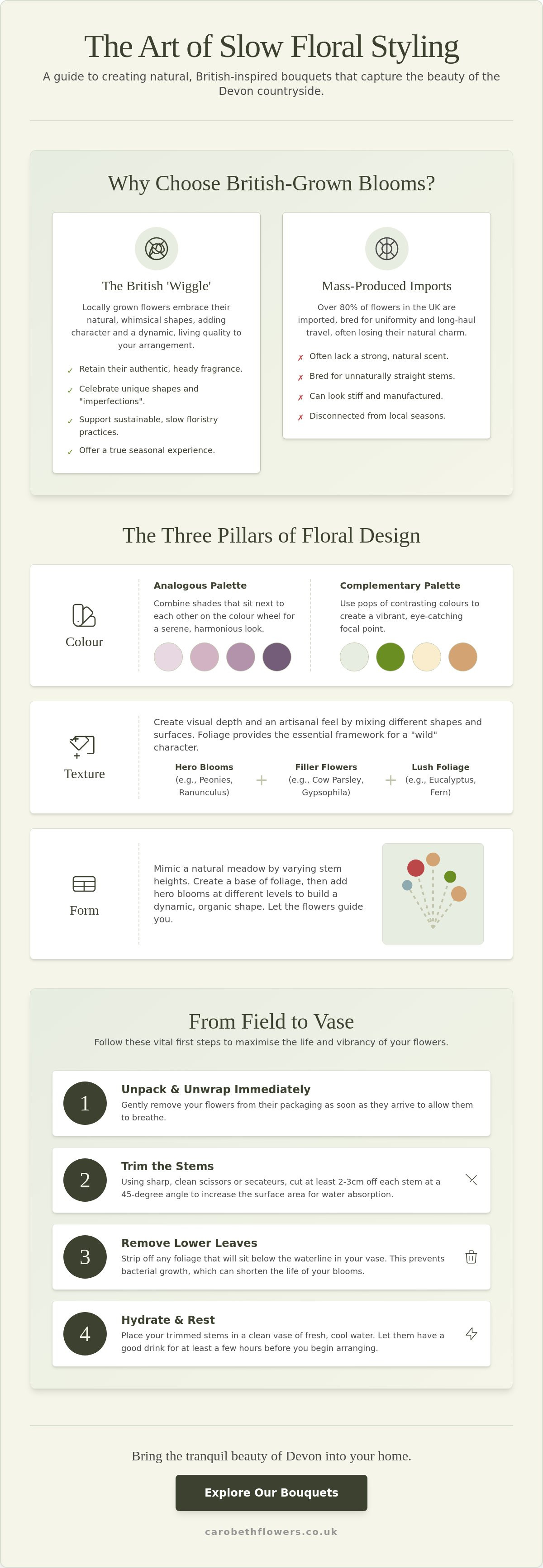
Choosing British-grown flowers over mass-produced imports completely transforms the styling experience. Whilst over 80% of cut flowers sold in the UK are imported from places like the Netherlands or Kenya, these blooms are often bred for uniform straightness and the ability to survive long-haul travel. In contrast, the "Slow Floristry" movement celebrates flowers that grow at their own pace. When we explore The Art of Flower Bouquet Styling, we find it's less about rigid geometry and more about a rhythmic connection to the land. Local Devon blooms retain their heady fragrance and their natural, whimsical shapes, offering an artisanal quality that imported varieties simply cannot mimic.
Character vs. Uniformity: Why We Love the 'Wiggle'
In the world of slow flowers, we celebrate the "wiggle." Pesticide-free blooms grown in Devon soil don't always grow in perfectly straight lines, and that's exactly where their beauty lies. These natural curves and unique shapes allow for a more dynamic, living arrangement that feels like a captured moment from a meadow. Transitioning from a "perfect" mindset to an organic one is incredibly freeing. You'll find that a slightly crooked stem or a tiny imperfection in a leaf adds character and depth, making your arrangement feel authentic rather than manufactured. It's about letting the flowers tell their own story.
The Emotional Benefits of Arranging Flowers
The sensory experience of styling is deeply therapeutic. As you trim stems and organise your bouquet, the scent of fresh earth and nectar fills the room, instantly softening the energy of your living space. It's a rare chance to pause and focus on the tactile details: the cool water on your hands, the vibrant colour shifts in a late-spring peony, and the delicate rustle of foliage. This ritual doesn't just result in a beautiful centrepiece; it leaves you with a profound sense of tranquility and accomplishment. A thoughtfully styled bouquet becomes a living reminder of the restorative joy found in nature's small, changing details.
Just as we tend to our surroundings for peace of mind, supporting our internal health is equally vital. If you are exploring ways to enhance your wellbeing through different life stages, you can visit Artemis Curated to discover supplements specifically formulated for women.
Essential Elements of Floral Design: Colour, Texture, and Form
Designing a bouquet that feels both intentional and wild is a delicate balance. It requires a shift from simply placing flowers in water to observing how each stem contributes to a larger story. The most successful flower bouquet styling projects are built upon three essential pillars: colour, texture, and form. By mastering these, you can move away from the "stiff" look of mass-produced bunches and instead create something that feels like a piece of living art. This process isn't about perfection; it's about reflecting the untamed beauty of the British countryside within your own four walls.
Working with a Seasonal Colour Palette
Nature is the best teacher for colour theory. For a serene and harmonious look, try combining analogous colours. These are shades that sit next to each other on the colour wheel, such as the soft pinks, mauves, and deep plums found in late-spring Devon gardens. If you want to create a more vibrant focal point, use complementary pops of colour. A bright apricot Icelandic poppy nestled against a backdrop of sage green foliage creates an instant, eye-catching contrast. Keep in mind that the changing light in your home, from the crisp morning glow to the soft shadows of the evening, will shift your perception of these hues throughout the day.
The Role of Texture and Foliage
Foliage is the essential framework of any styling project. It provides the hidden structure that holds your blooms in place and gives the arrangement its "wild" character. To create visual depth, mix delicate filler flowers like airy cow parsley with bold "hero" blooms like peonies or ranunculus. This contrast in scale and surface is what makes an arrangement feel professional yet artisanal. You might also consider tucking in a few dried flower elements amongst your fresh stems for a unique, multi-dimensional touch that celebrates the entire lifecycle of the plant.
Creating Form and Negative Space
Building a form that feels light and airy is the hallmark of the slow floral aesthetic. Instead of a dense, heavy dome, aim for an asymmetrical shape that suggests movement and growth. Start with your sturdiest foliage to create a loose skeleton, then weave in your more delicate stems at varying heights. This variation mimics the way flowers naturally compete for sunlight in a meadow, creating a sense of rhythm and life. Negative space is the intentional silence in an arrangement that allows each individual bloom to shine in its own light.
Selecting the Perfect Vessel for Your British Blooms
Choosing the right vessel is a vital step in the styling process, yet it is often where many feel the most uncertain. You don't need a cupboard full of expensive, professional-grade glassware to create something breathtaking. Often, the most soulful arrangements are those held by objects with their own story to tell. Whether it's a piece of hand-thrown artisanal pottery or a vintage marmalade jar found at a local Devon fair, the vessel should act as a quiet, supportive partner to your flowers. The goal is to match the container to the flower's natural growth habit, allowing the stems to sit comfortably as they would in the field.
The physical dimensions of your vessel, specifically its height and the width of its neck, will dictate the final shape of your bouquet. A wide-mouthed pitcher encourages a sprawling, unhurried display that feels full of movement and life. Conversely, a vessel with a narrow opening will naturally pull your stems into a more intimate, upright cluster. In flower bouquet styling, we learn to work with these physical boundaries rather than fighting against them. By selecting a container that complements the scale of your blooms, you ensure the arrangement feels balanced and grounded.
Vase Shapes and When to Use Them
Different stems require different levels of support to look their best. Column vases are essential for tall, architectural stems like foxgloves or larkspur; their height provides the necessary structure for these vertical beauties to stand proud. For a single, extraordinary bloom or a delicate sprig of blossom, bud vases are the perfect choice. They allow you to highlight the intricate details of a lone ranunculus, perhaps placed on a bedside table for a moment of quiet reflection. If you're aiming for a relaxed, "just-picked" feel, ceramic pitchers and stoneware jugs are ideal for creating a meadow-style display.
Sustainability in the Vase
In keeping with the "slow living" philosophy, we always recommend avoiding floral foam, which is a single-use plastic that can harm the environment. Instead, embrace sustainable alternatives like a small ball of recyclable chicken wire or a reusable metal floral frog to provide structure. Repurposing household items such as old teapots or simple jam jars adds a charming, eco-friendly layer to your display. To ensure the longevity of your organic flowers, always start with a meticulously clean vessel. Bacteria is the primary enemy of fresh stems; a quick scrub with soapy water before you begin flower bouquet styling will help your blooms stay vibrant for as long as possible.
Styling Secrets for Every Room: Bringing the Countryside Indoors
Once you have mastered the basics of flower bouquet styling, the next step is to consider where your arrangement will live. A bouquet isn't just a static object; it's a living presence that interacts with its surroundings. Before you even trim a stem, think about the viewing angle. Is your arrangement destined for a mantlepiece where it will only be seen from the front? Or is it a centrepiece for a dining table where guests will view it from every side? Answering this dictates how you distribute your "hero" blooms and where you place your supporting foliage to ensure the display looks balanced from every perspective.
Adjusting the scale of your styling to suit the room is equally important. A grand, sprawling arrangement that looks magnificent in a hallway might feel overwhelming on a small bedside table. For intimate spaces, choose smaller vessels and more delicate stems that invite close-up observation. In larger rooms, you can afford to be bolder with architectural branches and taller flowers that draw the eye upwards. This intentionality ensures that your flowers enhance the room's energy rather than competing with it.
Placement and Light
Finding the right spot requires a balance between aesthetic joy and practical longevity. Whilst we all love the look of sun-drenched petals, direct, scorching sunlight can quickly wilt delicate British-grown flowers. Aim for a bright, airy spot with filtered light instead. It's also vital to keep your blooms away from fruit bowls; ripening fruit releases ethylene gas, which causes flowers to age prematurely. By placing your arrangement in a draught-free area where you spend your most quiet moments, you create a dedicated floral sanctuary for reflection and rest.
Styling for Different Occasions
The purpose of a room often dictates the best styling approach. For a dinner party, low-profile arrangements are essential. They allow conversation to flow easily across the table without guests having to peer through a forest of stems. Conversely, tall, welcoming displays make a wonderful statement in entryways across Exeter and Devon, offering a breath of fresh countryside the moment someone walks through the door. In a home office, a more minimalist approach works best. A few carefully chosen stems in a simple vessel can provide a calm, creative focus without cluttering your workspace.
Throughout the styling process, remember that these flowers are still living. Give them a fresh snip at a 45-degree angle before they go into the vase to help them drink. If you're ready to bring this tranquil beauty into your own home, you can explore our seasonal Local Delivery Bouquets. Taking the time to place your flowers thoughtfully ensures they remain a source of restorative joy for as long as possible.
From Field to Vase: Styling Your Carobeth in a Box
Receiving a Carobeth in a Box is an invitation to slow down and engage with the seasons. It's more than just a delivery of stems; it's a bundle of Devon's natural beauty, carefully gathered and sent to your door. The moment you open the lid, you're greeted by the scent of the fields and the unique textures of blooms grown with intention. Before you begin the creative process of flower bouquet styling, it's essential to treat these flowers with the same care they received in the soil. This initial preparation ensures your arrangement remains vibrant and restorative for as long as possible.
Unboxing is a tactile ritual that sets the tone for your styling journey. Each stem has its own character, from the sturdy reach of foliage to the delicate curve of a poppy. By taking a methodical approach to conditioning, you allow the flowers to recover from their journey and prepare for their new home. This isn't a task to be rushed. Instead, view it as the opening chapter of your creative dialogue with nature, where you get to know the specific shapes and colours that will soon fill your living space.
The First Hour: Preparation and Care
Conditioning your blooms is the most vital step for longevity. Start by using sharp, clean snips to trim every stem at a 45-degree angle. This simple act maximises the surface area for water uptake, allowing the flowers to have the "long drink" they need. It's also important to strip away any lower leaves that would sit below the water line in your vessel. Leaves left in water will decay and promote the growth of bacteria, which is the primary cause of premature wilting. Once prepped, let your flowers relax in a bucket of fresh, cool water in a quiet, shaded spot for at least an hour before you begin organising them into their final display.
Step-by-Step Arrangement Guide
When you're ready to start your flower bouquet styling, follow this unhurried guide to build a natural, meadow-inspired look:
- Create the Structure: Begin with your sturdiest foliage. Place these stems first to create a supportive "nest" or framework that will hold the more delicate flowers in place.
- Add the Secondary Stems: Intersperse your smaller, textured flowers amongst the foliage. These add depth and pops of seasonal colour, filling the gaps without making the arrangement feel dense.
- Place the Hero Blooms: These are your showstoppers. Position them last, ensuring they sit at varying heights to create a sense of natural growth and movement.
- The Final Flourish: Tuck in the delicate, "wispy" bits, such as grasses or cow parsley. These light elements provide that signature Carobeth meadow feel, breaking the silhouette and adding a touch of whimsy.
For a truly artisanal touch, consider mixing in elements from our Dried Flowers collection. Tucking a few preserved seed heads or grasses amongst your fresh Devon stems adds a unique, multi-dimensional texture. This blend of the fresh and the everlasting celebrates the entire lifecycle of the garden, creating a display that feels both timeless and deeply connected to the earth.
Cultivating Your Own Seasonal Sanctuary
Embracing the slow floral movement is about more than just aesthetics; it is an invitation to pause and reconnect with the quiet rhythms of the land. By focusing on the natural form of each stem and choosing vessels that support their unique character, you transform a simple bunch of flowers into a living piece of art. You've learned that successful flower bouquet styling relies on a harmonious balance of colour and texture, alongside the vital first steps of conditioning your blooms for a long, vibrant life. These small, intentional acts turn the process of arranging into a restorative ritual that changes the energy of any room.
Every stem we provide is 100% British-grown in our Devon fields using pesticide-free and organic methods, ensuring that the beauty you bring into your home is as kind to the earth as it is to your wellbeing. Whether you are in the heart of the South West or further afield, our nationwide delivery brings these fresh and dried treasures directly to your door. Discover the seasonal beauty of Carobeth in a Box and start styling today. We encourage you to trust your creative instincts and find joy in the simple, changing details of the seasons.
Frequently Asked Questions
How do I make my styled flower bouquet last longer?
Ensuring your blooms remain vibrant begins with a meticulous cleaning of your vessel and fresh, angled snips to every stem. By cutting the stems at a 45-degree angle, you increase the surface area for hydration, allowing the flowers to drink more effectively. Placing your arrangement in a cool spot away from direct heat and ripening fruit also helps. These simple, mindful steps can extend the life of your Devon-grown flowers by several days.
What are the best flowers for beginners to style at home?
Beginners often find success with sturdy, architectural stems that hold their shape reliably, such as tulips, narcissi, or ranunculus. These flowers have clear forms that make it easier to understand the basics of balance and height without the stems feeling too delicate. Combining these with a few sprigs of hardy foliage like eucalyptus or rosemary provides a supportive structure, allowing you to build confidence as you explore your own creative style.
Can I mix dried flowers with fresh ones in the same arrangement?
Mixing dried elements with fresh stems is a wonderful way to add depth and an artisanal feel to your flower bouquet styling. The contrast between soft, living petals and the sculptural textures of dried seed heads or grasses creates a truly unique, multi-dimensional display. Just ensure the dried stems are kept above the water line, as constant moisture can cause them to soften or discolour over time.
Do I need to use the flower food that comes in the box?
Whilst the provided flower food contains helpful nutrients and a gentle biocide, the most important factors for longevity are clean water and fresh snips. If you prefer a more organic approach, you don't strictly need to use it. A dash of lemon juice or a tiny drop of bleach can act as a natural alternative to keep bacteria at bay, but simply changing the water regularly is often enough to keep your blooms happy.
How often should I change the water in my vase?
You should aim to change the water in your vase every two to three days, or as soon as it begins to look slightly cloudy. Fresh water is essential to prevent the build-up of bacteria that can block the stems and cause wilting. Each time you refresh the water, give the stems a tiny new trim of about half a centimetre to keep the pathways open for hydration and nutrient uptake.
What is the best way to style flowers for a wedding bouquet?
The most beautiful wedding bouquets embrace a natural, 'just-picked' aesthetic that mirrors the movement of the Devon countryside. Focus on creating an asymmetrical shape with plenty of varying heights and textures to avoid a stiff, formal look. Use a comfortable 'hand-tied' technique, securing the stems with a simple silk or linen ribbon. This unhurried approach ensures the bouquet feels like a personal expression of the season rather than a manufactured object.
Is it better to use a glass or ceramic vase for British flowers?
The choice between glass and ceramic depends on the atmosphere you wish to create within your home. Glass vessels offer a clean, airy look that allows you to appreciate the beauty of the stems and the clarity of the water. Ceramic vases, particularly hand-thrown pieces, add an artisanal weight and texture to your arrangement. Both are excellent for British flowers; just ensure the neck width supports the natural lean of your blooms.
How do I style flowers that have arrived in a letterbox-style box?
Styling flowers from a letterbox-style delivery requires a little extra patience during the initial conditioning phase to help them recover from their journey. Once you have given them a long drink in a cool spot for at least an hour, you can begin the process of flower bouquet styling by layering your stems. Start with your foliage to build a supportive base, then weave in your hero blooms, letting their natural 'wiggle' dictate where they sit.