
Choosing the Perfect Wedding Bouquet: A Sustainable Buying Guide for Your 2026 Wedding
Imagine stepping into your 2026 celebration holding a bundle of peonies and sweet peas that haven't spent days in a refrigerated cargo hold, but were instead gathered at dawn from a nearby meadow. Planning your wedding bouquet wedding details can often feel like a whirlwind of endless choices and environmental worries, especially when you want your day to reflect your values as much as your style. It's natural to feel overwhelmed by the pressure to choose blooms that look perfect whilst wondering about the hidden impact of imported stems.
You deserve a floral arrangement that feels like a restorative breath of fresh air, one that honours the rhythms of the earth without sacrificing an ounce of beauty. This guide provides a clear framework for selecting breathtaking, British-grown flowers that align with your unique aesthetic and sustainable heart. We will explore how to navigate the British growing seasons, select a bouquet shape that complements your silhouette, and find a local, pesticide-free florist who shares your passion for intentional, slow living.
Key Takeaways
- Understand the restorative power of scent and why pesticide-free, British-grown flowers offer a sensory depth that mass-produced imports simply lack.
- Learn to embrace the natural rhythms of the British seasons to ensure your wedding bouquet wedding is filled with the most vibrant and resilient blooms available.
- Discover how to select a bouquet shape and size that harmonises with your silhouette whilst honouring the wild, organic beauty of the land.
- Gain the clarity needed to choose a florist who values sustainability, local craftsmanship, and the protection of our natural world.
Understanding the Anatomy and Allure of a Seasonal Wedding Bouquet
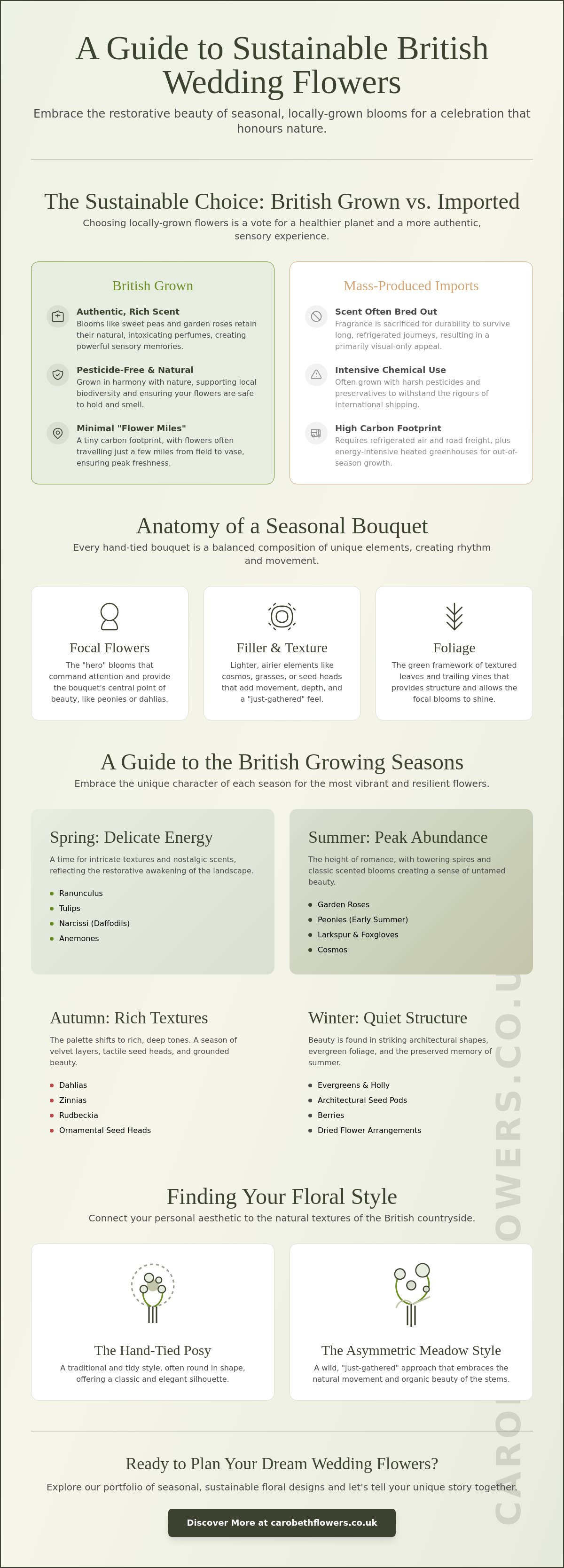
A sustainable wedding bouquet is far more than just a beautiful accessory; it's a living testament to the land's health and the grower's care. When we speak of sustainability, we're describing flowers that are grown without harsh pesticides, nurtured in rhythm with the British seasons, and harvested within a few miles of where they'll eventually be held. This "field-to-vase" philosophy is at the heart of the art and business of floristry today, offering a relaxed and organic aesthetic that mass-produced imports simply can't replicate. By choosing blooms that naturally thrive in our countryside, you're embracing your floral heritage and telling a story that's uniquely yours. It's a quiet, restorative joy. This intentional approach ensures your wedding bouquet wedding feels authentic, grounded, and deeply connected to the moment.
The Scent Factor: Why Scent Matters for Your Wedding
Scent is perhaps the most powerful bridge to our emotions and memories. Imagine catching a fleeting note of garden mint or a sun-warmed rose years from now and being instantly transported back to your wedding morning. Many imported flowers have their fragrance bred out of them to survive long journeys in refrigerated holds, but British-grown sweet peas and herbs retain their intoxicating, restorative perfumes. These scents act as emotional anchors, making your bridal flowers a sensory experience rather than just a visual one. It's a layer of beauty that artificial stems simply cannot provide.
Anatomy of a Bouquet: Focal Flowers, Fillers, and Foliage
Every wedding bouquet wedding has its own rhythmic structure. We begin with "hero" blooms, such as the pillowy peonies of June or the intricate dahlias of late summer, which provide a focal point of artisanal beauty. These are supported by "filler" flowers and delicate, airy elements like cosmos or grasses that add a sense of movement. As you walk down the aisle, these "dancing" stems should sway gently, reflecting the wild and unhurried grace of a Devon meadow. Don't forget the foliage; textured leaves and trailing vines provide the necessary frame to let those focal blooms truly shine.
Navigating the British Growing Season: A Month-by-Month Guide
Seasonality is the practice of only using what the Devon earth naturally provides at that specific moment. By choosing flowers that are in their natural prime, you ensure your wedding bouquet wedding possesses the highest quality and most vibrant colours. It's about more than just aesthetics. Working with nature rather than against it reduces the environmental impact of wedding flowers, as it avoids the heavy carbon footprint of international shipping and heated greenhouses. For more detailed insights into specific monthly availability, our guide on Sustainable Wedding Flowers: A Guide to Seasonal British Blooms offers a closer look at the garden's calendar.
Spring and Summer: The Peak of British Abundance
The early months of the year offer a delicate, restorative energy. Spring arrangements often feature the intricate, paper-thin textures of ranunculus, the bold lines of tulips, and the nostalgic scent of narcissi. As the days lengthen, we enter the era of the garden rose. These blooms, alongside the towering spires of larkspur and foxgloves, bring height and a sense of untamed romance to your day. These flowers thrive when they're allowed to grow at their own pace, resulting in stronger stems and more resilient petals.
Autumn and Winter: Texture, Berries, and Dried Delights
As the air cools, the palette shifts toward richer, deeper tones. Autumn brings the velvet layers of dahlias and zinnias, whilst ornamental seed heads add a tactile quality that feels grounded and sincere. Winter weddings find beauty in structure rather than abundance. We utilise the architectural shapes of evergreens and architectural seed pods to create a striking winter aesthetic. Many couples also find peace in the quiet elegance of dried flower arrangements, which preserve the memory of the summer months in a way that's both sustainable and deeply evocative.
Finding Your Floral Style: Shapes, Sizes, and Sustainable Choices in Devon
Finding the right aesthetic for your wedding bouquet wedding is a gentle, creative process that connects your personal style to the textures of the Devon countryside. We often guide couples through a variety of shapes, from the traditional, tidy round hand-tied posy to the wild, asymmetric "meadow" style. This latter approach, often described as "just-gathered," embraces the natural movement of the stems, allowing them to arch and sway as they would in a sun-drenched field. When selecting your size, it's helpful to consider the silhouette of your dress. A delicate, slim-fitting gown often pairs beautifully with a smaller, more intricate posy, whilst a voluminous skirt can carry a larger, more dramatic arrangement without being eclipsed. It's about finding a harmonious balance that feels comfortable and true to your frame.
Matching Your Bouquet Shape to Your Venue
The setting of your celebration plays a vital role in the "flow" of your floral choices. A wild, airy bouquet perfectly mirrors the rustic charm of a Devon barn or the rolling slopes of a vineyard, where flowers seem to have wandered in from the nearby hedgerow. These settings invite a sense of unhurried ease and artisanal beauty. For those seeking more specific guidance on this regional approach, our reference on sustainable wedding flowers in Devon provides a wealth of local inspiration to help you choose blooms that feel at home in their surroundings.
The Sustainable Commitment: Why "Pesticide-Free" is the Future
Choosing a local, pesticide-free florist is a profound act of care for the land and yourself. It's not just about environmental protection; it's about the health of everyone who touches the blooms, from the grower to the couple holding them close throughout the day. By adopting sustainable floral design practices, we ensure that your flowers are as kind to your skin as they are to the bees. At Carobeth Flowers, we see ourselves as your creative mentors, guiding you toward choices that are intentional and restorative. This commitment to the earth ensures your wedding is a true reflection of a more connected and meaningful way of living.
Embracing a Seasonal Path for Your Celebration
Your journey toward a more intentional and mindful celebration begins with a single, thoughtful choice. By embracing the natural cycles of the Devon landscape, you ensure your wedding bouquet wedding is a fragrant, living memory that honours both your love and the earth. We've explored how seasonal availability and pesticide-free growing methods create arrangements with a depth of character that mass-produced alternatives simply cannot match. Whether you're dreaming of a wild meadow style or a more delicate posy, the result should feel like a natural extension of your own creative spirit.
At Carobeth, our blooms are 100% British-grown on our Devon farm using organic, pesticide-free methods that protect the land we love. We take great pride in our specialised floral designs for local venues, including the serene Brickhouse Vineyard. We invite you to enquire about your bespoke Carobeth Wedding Flowers to begin cultivating your seasonal story. Trust in the quiet, restorative beauty of the seasons; your perfect bouquet is already waiting to bloom in its own time.
Frequently Asked Questions
How do I choose the right wedding bouquet for my wedding?
Choosing the right arrangement begins with a quiet reflection on your dress silhouette and the atmosphere of your venue. A wild, meadow-style bouquet often suits the unhurried grace of a Devon barn, whilst a classic round hand-tied posy provides a more traditional elegance. Selecting a wedding bouquet wedding style that feels authentic means finding a balance between your personal aesthetic and the natural textures provided by the current season.
What are the best seasonal flowers for a UK wedding in 2026?
The best blooms are always those that thrive naturally in the British climate during your chosen month. Spring weddings in 2026 will be defined by scented narcissi and delicate tulips, whilst summer celebrations remain the era of the garden rose and larkspur. If you're planning an autumn date, look for rich dahlias and zinnias, whereas winter weddings find restorative beauty in evergreens and architectural dried flower arrangements.
Can I have a sustainable wedding bouquet if I want specific colours?
You can absolutely align your sustainable values with a specific colour palette by embracing the natural diversity of the British landscape. Our growers offer a vast spectrum of hues, from soft, ethereal blushes to bold, playful citrus tones. We encourage couples to focus on a "colour feeling" rather than an exact match, allowing the unique character and natural imperfections of pesticide-free blooms to add artisanal depth to the day.
What is the difference between a hand-tied and a cascade bouquet?
A hand-tied bouquet is a gathered arrangement where the stems are left visible, creating a relaxed and "just-picked" look that celebrates the field-to-vase aesthetic. A cascade bouquet is more structural, featuring flowers that flow downwards in a graceful teardrop shape for a sense of drama. Both styles can be achieved using sustainable floral design practices that honour the inherent movement and sway of each individual stem.
How far in advance should I book my sustainable wedding florist in Devon?
It's best to secure your florist 12 to 18 months before your celebration to ensure they can plan with the natural cycles of the earth. Because local growers work in harmony with the seasons, they often have limited capacity for bespoke projects each year. Booking early allows you to build a connection with a creative mentor who can guide you through the unhurried process of designing your wedding bouquet wedding flowers.